Key Takeaways
- Cold chain monitoring protects products from origin to delivery by continuously tracking temperature across storage, transport, and handling — giving you visibility and control at every stage.
- Problems are usually caught too late. Products can lose integrity before any visible sign appears, so continuous monitoring is what surfaces issues early enough to act.
- The last mile is the biggest risk, where small temperature increases quietly add up into “temperature drift” across delivery stops and dock waits.
- Real-time monitoring beats manual checks because logs only capture single moments — sensors capture everything in between.
- Better monitoring means lower risk and confident growth, reducing spoilage, compliance breaches, and rejected deliveries while supporting smarter forecasting and planning.
Temperature-sensitive products leave little room for error. One change in environmental conditions can affect product quality, create compliance pressure, disrupt supply chains, and introduce avoidable cost into your operation.
That’s where cold chain temperature monitoring matters. Cold chain monitoring tracks and maintains consistent temperature conditions across storage, handling, transport, and delivery to protect product integrity from origin to final destination.
For businesses moving food, pharmaceuticals, FMCG products, and other temperature-controlled goods, monitoring creates visibility. Visibility creates control. And stronger control supports better operational decisions while reducing the risk of spoilage, delays, product loss, and unnecessary disruption.
What Happens When Temperature Control Fails?
Temperature failures can be a disaster. Spoiled stock. Rejected deliveries. Compliance breaches. Customer complaints. Brand damage. Financial loss.
Without strong cold chain compliance and inventory protection processes in place, temperature variation can quickly shift from an isolated incident into a broader commercial risk. Products exposed to uncontrolled conditions may no longer meet quality expectations, safety requirements, or customer standards.
The challenge is that temperature failures are often discovered too late. By the time a breach becomes visible, product integrity may already be affected.
That’s why inventory protection and continuous visibility matter. Cold chain temperature monitoring acts as an active risk management process, helping identify changes earlier, support compliance confidence, and give your team the visibility to respond before temperature variation affects the product.
What is cold chain temperature monitoring?
To understand cold chain temperature monitoring, you first need to understand the cold chain.
The cold chain is the end-to-end process of storing, handling, transporting, and delivering temperature-sensitive products under controlled conditions to maintain quality, safety, and performance. It covers every stage of movement from storage through to final delivery.
Cold chain temperature monitoring is the process that keeps that system under control. It continuously measures and tracks environmental conditions to ensure products remain within their required temperature range throughout the journey.
Monitoring applies across cold storage facilities, warehouse handling, loading and unloading, refrigerated transport, distribution centres, and last-mile delivery. Every transfer point creates potential for temperature variation, making visibility essential.
Without monitoring, you’re relying on assumptions. Continuous visibility helps protect product integrity before temperature variation creates operational, compliance, or customer impacts.
Cold chain temperature monitoring creates confidence.
Why temperature control is critical in the cold chain
Cold chain performance depends on stable temperatures and controlled conditions across the entire supply chain.
Temperature variation affects product quality, shelf life, and customer outcomes long before visible signs of deterioration appear. Products can gradually lose integrity while still appearing acceptable during storage, handling, transport, or delivery. By the time an issue becomes visible, the damage may already be irreversible.
That’s why maintaining controlled conditions throughout the journey matters. Without temperature-controlled environments supported by continuous monitoring, there’s no reliable way to confirm the cold chain was maintained. In temperature-sensitive supply chains, assumptions create risk.
Continuous cold chain temperature monitoring provides visibility that products remained within required conditions from storage through to final delivery. If you can demonstrate where products have been, what conditions they experienced, and how they were managed, you’re doing more than protecting inventory.
Good cold chain management is good risk management. You’re protecting your business, your reputation, your product quality, and the trust your customers place in you.
Where temperature monitoring matters most
Cold chain temperature monitoring matters at every stage. Small changes at any point become larger quality issues if left undetected. But certain points along the cold chain journey carry greater risk than others.
Cold room and cold storage temperature monitoring
Products moving in and out of storage create constant environmental change, and frequent door openings, stock movement, delayed put-away times, and overcrowding can all affect temperature stability
Transport and in-transit movement
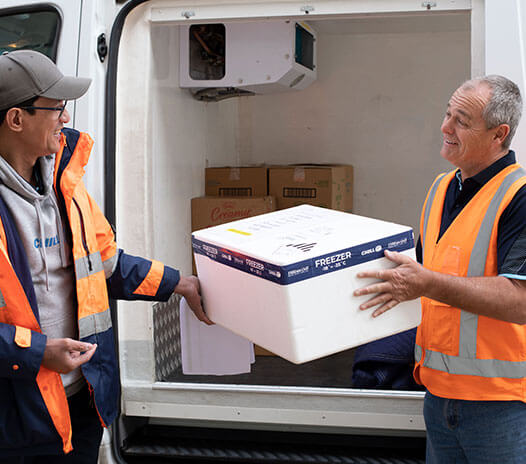
Transport introduces additional complexity. Loading times, route conditions, delivery windows, traffic delays, repeated door openings, equipment performance, and time spent stationary all create opportunities for environmental variation.
Last-mile delivery and temperature drift
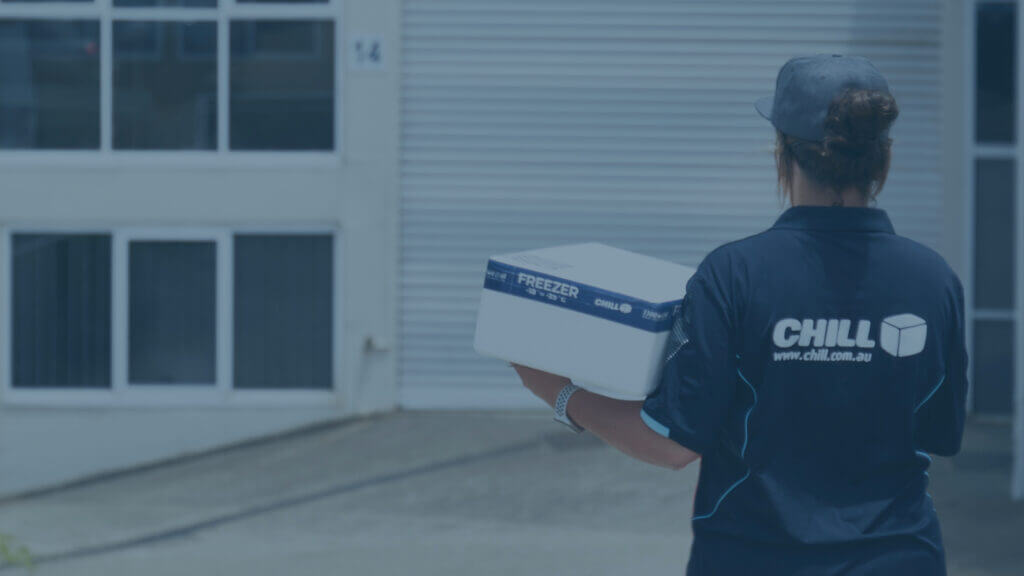
The last-mile is the most critical. Waiting at loading docks, multiple delivery stops, unloading periods, and repeated exposure outside refrigerated environments can create temperature drift, where small temperature increases accumulate over time. Individually, these moments may seem insignificant. Combined, they can gradually move products outside intended conditions and affect product integrity.
That’s why continuous cold chain temperature monitoring from storage through to final delivery matters.
Manual checks vs real-time cold chain monitoring
For years, cold chain temperature monitoring relied on manual checks. A team member records a reading, signs a log, and confirms conditions were acceptable at that point in time. It creates a record, but only of a moment.
The problem is everything that happens between those checks. A temperature fluctuation during loading. A delayed delivery window. A cold room door left open longer than expected. Manual logs don’t capture those moments, which means variation can go unnoticed until product quality is questioned or inventory has already been affected.
Real-time cold chain temperature monitoring closes those visibility gaps. Instead of isolated temperature snapshots, modern monitoring systems provide continuous oversight across storage, transport, and delivery environments.
How modern cold chain monitoring works
Modern cold chain temperature monitoring gives you visibility beyond isolated temperature checks and manual records. Instead of relying on snapshots in time, it creates a continuous view of conditions across storage, transport, and delivery so you know what your products actually experienced throughout their journey.
This visibility is powered by sensors placed throughout temperature-controlled environments. These sensors continuously capture environmental conditions and feed that information into connected monitoring platforms that track performance in real time.
If conditions begin to shift, teams can see it sooner and act sooner. The result is stronger operational control and moving from reacting after a problem to managing risk before it affects product integrity.
Common risks without proper monitoring
Without proper monitoring, temperature control becomes reactive instead of controlled. And by the time a problem becomes visible, the product may already be affected.
Common risks for businesses without cold chain temperature monitoring are:
- Product spoilage and reduced integrity
- Financial loss and operational disruption
- Compliance breach and investigation requirements
- Rejected deliveries and inventory uncertainty
- Strained customer relationships and brand impact
Strong monitoring processes reduce these risks and give businesses greater control before small issues become expensive problems.
The role of data, reporting, and audit trails
Good cold chain temperature monitoring creates evidence.
Data, reporting, and audit trails give you visibility into what conditions your products experienced across storage, handling, transport, and delivery. That visibility enhances compliance requirements, strengthens accountability, and gives teams greater confidence that products remain within controlled conditions throughout their journey.
Historical records also help track performance over time, identify trends, investigate incidents faster, and support stronger operational decisions. When questions arise, reliable reporting replaces assumptions with documented evidence.
At CHILL, technology-led cold-chain management supports greater stock visibility, remote monitoring capability, and stronger inventory reporting across temperature-controlled logistics operations. Because better visibility creates better control, and better control protects your products, your reputation, and your business.
How better monitoring supports business growth
Better cold chain temperature monitoring gives you the visibility and control needed to grow with confidence. As inventory volumes increase and operations become more complex, continuous monitoring helps maintain consistency.
With reliable temperature management, you can say goodbye to day-to-day stress by giving you stronger visibility, faster response capability, and better decision-making around forecasting, capacity, and service delivery. With greater confidence in product conditions, you can plan ahead instead of reacting to uncertainty.
That’s where CHILL becomes the grounding factor. Through technology-led cold-chain management, continuous visibility, and disciplined execution, CHILL helps businesses scale without losing control of the conditions that matter most.
Choosing the right cold chain partner
What matters most in the right cold chain partner comes down to visibility and accountability. Look for real-time monitoring with integrated storage and transport capability.
That’s where CHILL stands apart. We combine technology-led monitoring, integrated cold-chain services, and disciplined execution to help protect your products and support your growth.
When conditions matter, you need a partner built for temperature control. Find out how we can help customise your product’s cold chain storage and transport solution.
Frequently Asked Questions
How Often Should Cold Chain Temperatures Be Checked?
Temperature-sensitive products should be monitored continuously wherever possible.
What are the Standard Temperature Ranges for Cold Storage and Transport?
Temperature ranges vary depending on the product, industry requirements, and storage conditions. Products should always be stored and transported within manufacturer specifications and quality control requirements.
What Industries Require Strict Cold Chain Monitoring?
Food and beverage, pharmaceuticals, healthcare, seafood, dairy, retail, and FMCG industries commonly rely on strict cold chain monitoring to protect product integrity and support compliance requirements.
How Do Real-Time Alerts Improve Cold Chain Performance?
Real-time alerts notify teams as conditions begin to change, helping them intervene earlier, reduce product exposure, and maintain stronger operational control across the cold chain.
What Should You Do If a Temperature Breach Occurs?
Act immediately by identifying affected inventory, reviewing monitoring records, investigating the cause, and following internal quality and compliance procedures.